














customer satisfaction surveys

Customer satisfaction surveys – how do they help us get to know our customers better?

What is a customer satisfaction survey?

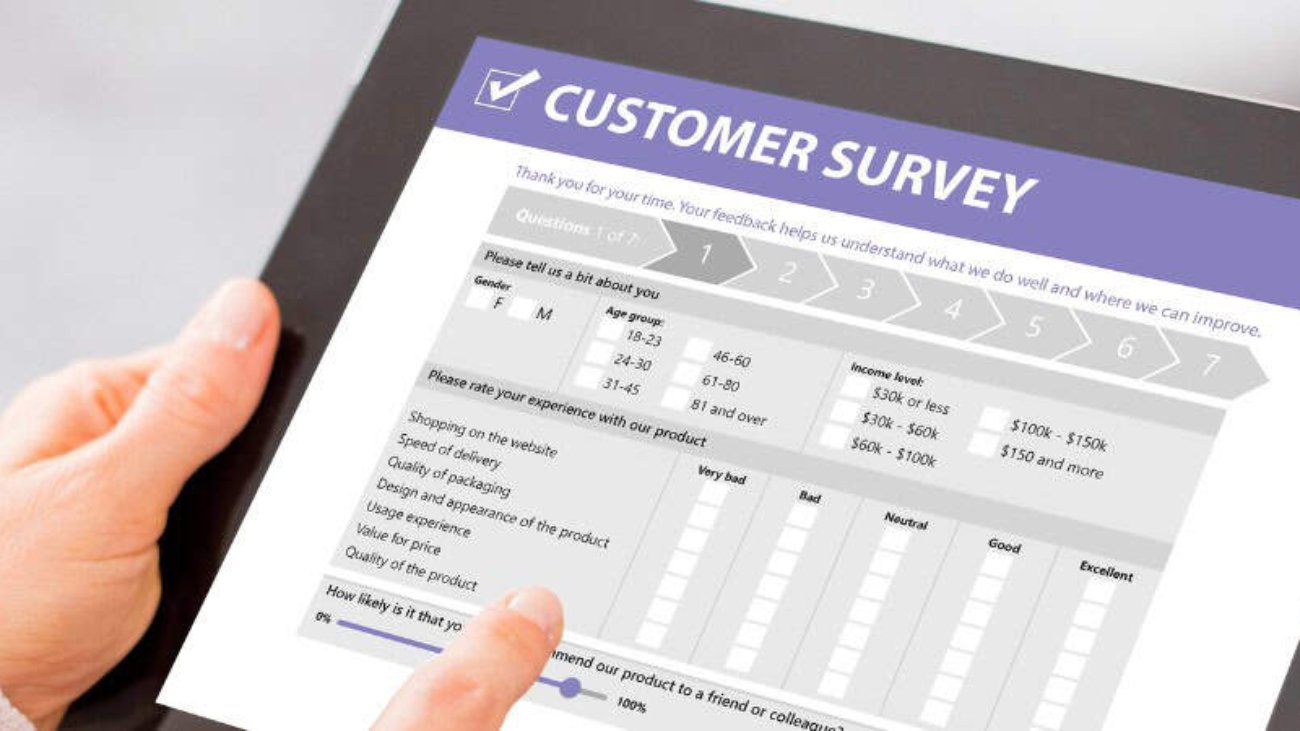
A customer satisfaction survey is a systematic way to measure how satisfied your customers are with the products, services, or customer service you offer. These surveys help you understand not only the overall customer sentiment but also identify specific strengths and weaknesses of your business. The results enable the company to better understand customer expectations and take targeted action—both by improving product quality and optimizing the customer experience.

The most commonly used methods:

  • Surveys with rating scales (e.g., NPS – Net Promoter Score).
  • Open-ended questions about experience.
  • Conversations or in-depth interviews with loyal customers.

Customer research not only helps identify problem areas but also uncovers opportunities for growth. It’s not just about the numbers—it’s about insights that help build a long-term, strong relationship with the customer.

Why is it worth conducting customer satisfaction surveys?

Customer satisfaction surveys provide businesses with invaluable insights. They help you understand how customers view your services or products and identify areas for improvement. The survey results enable you to make informed decisions rather than relying on guesswork or gut feelings.

Here are a few key reasons why it’s worth conducting a customer satisfaction survey:

  • Improving the customer experience – by knowing what your customers like and dislike, you can make more effective adjustments to your processes.
  • Building Loyalty – customers who feel heard are more likely to return.
  • Preventing negative reviews – by identifying problems early on, you can avoid public criticism.
  • Strategic business development – research helps identify which services or products have the greatest potential.

Customer research is not just a survey, but also a strategic tool for long-term growth.

What kind of information do customer surveys help reveal?

Customer surveys – it’s not just a way to ask whether a customer was satisfied. A well-designed customer satisfaction survey helps uncover in-depth insights into how customers really feelwhat they like and what causes dissatisfaction. It is a tool that helps businesses make informed, data-driven decisions.

Customer satisfaction surveys can reveal:

  • The gap between customer expectations and actual experience – does what you promise match what the customer actually receives?
  • Customer journey – which stages bring joy, and which ones bring frustration?
  • Level of satisfaction at different touchpoints: from browsing the website to post-purchase support.
  • Perception of value – does the price reflect the quality the customer receives?
  • The client's emotional state – does he feel included, ignored, or confident?
  • Probability of loyalty – would the customer buy from us again or recommend us to someone else?
  • Needs and untapped opportunities – what else would customers like to have but aren't currently getting?

In addition, customer surveys help identify not only problems but also successful processes—what is already working well and should be further strengthened. For example, if surveys show that customers particularly value quick responses to inquiries, this becomes a competitive advantage worth emphasizing even more.

It is important to note that such surveys can be conducted using different criteria—such as product, customer segment, region, or even a specific employee. This approach not only improves the overall customer experience but also enables the making of targeted micro-decisions that help grow the business consistently.

How can you obtain accurate and useful customer survey results?

For a customer satisfaction survey to yield tangible benefits, it is important to ensure its quality—from the wording of the questions to the analysis of the results. Even a minor error can skew the results and lead to incorrect decisions.

Here are a few practical tips:

  • Clear and specific questions – avoid ambiguity or overly broad phrasing.
  • The right time and channel – survey the customer immediately after the purchase or service, while their impressions are still fresh.
  • Anonymity – Guaranteed privacy encourages openness.
  • Quantitative and qualitative issues – combine the scale ratings with the option to add comments.
  • Regularity – a one-time survey is useful, but only ongoing research will reveal trends.

Good customer research is about quality, not quantity. The more accurate the data, the better we can optimize the customer experience and make decisions that address real needs.

Why should you entrust your customer surveys to the Increla team?

Customer satisfaction surveys are only truly valuable when conducted by experienced professionals. The Increla team not only designs professionally crafted surveys but also helps analyze the data and turn it into actionable insights. Our strength lies in our ability to understand the specifics of both the B2C and B2B sectors, so every survey is tailored to your business goals.

Phone surveys increla.lt

Telephone surveys – how do they work and who benefit from them?

What is a telephone survey?

Telephone survey is a research method in which respondents are interviewed by phone to gather opinions, information, or insights on a specific topic. This method is often used in market research, in customer service evaluations or in public opinion surveys. Telephone surveys allow you to quickly and effectively reach people in different regions, saving time and money. In addition, direct contact provides the opportunity to ask follow-up questions and respond immediately to answers. Because of these advantages, telephone surveys remain relevant even in today’s digital world.

How does the telephone survey process work?

The telephone survey process begins with identifying the target audience and developing the questionnaire. Once the questions have been finalized, interviewers begin calling respondents either from a selected list or using random sampling. Responses are collected during the interview and are later organized and analyzed. It is important that the telephone survey is conducted professionally—with a clear introduction, a respectful tone, and clear questions. This process allows for the effective collection of high-quality data that helps companies or organizations make informed decisions. A telephone survey is a reliable source of information.

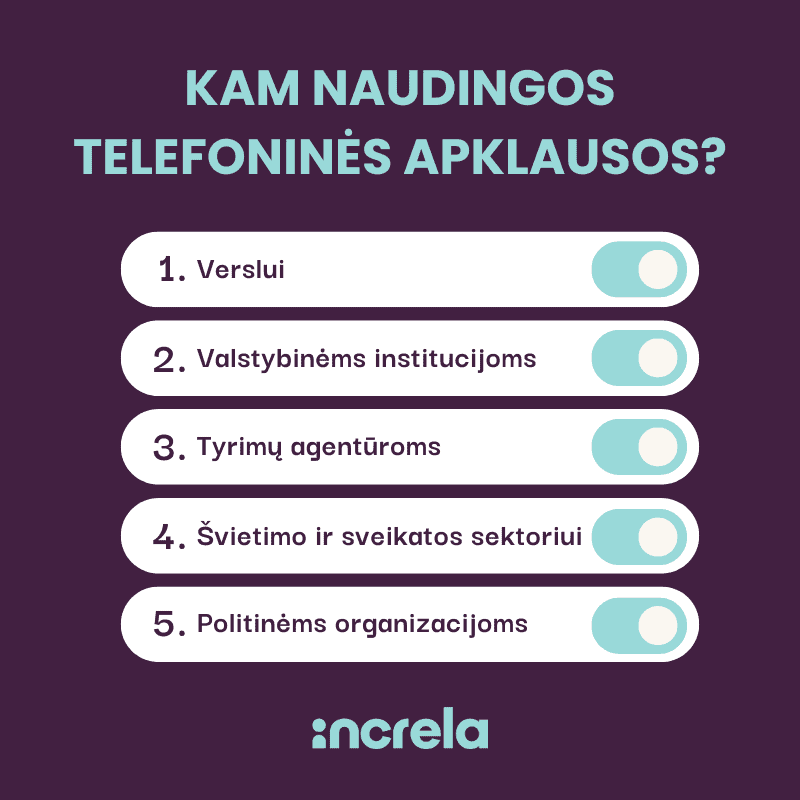
Who benefits from telephone surveys?

  • For Businesses – telephone surveys help us understand customer needs, assess service quality, and gather feedback on products.
  • To government agencies – useful for gauging public opinion when evaluating public services or making decisions.
  • For research agencies – allows for the rapid collection of representative data from various target groups.
  • For the education and health sectors – helps assess the effectiveness of services or the user experience.
  • For political organizations – used to analyze voter sentiment or assess the effectiveness of campaigns.

Telephone survey remains important when direct contact and high-quality, reliable data are needed.

What kind of information can a telephone survey help gather?

  • Customer feedback about services, products, or customer service quality—this helps improve business processes.
  • Public sentiment on political, social, or economic issues—useful for the media, politicians, or researchers.
  • Market needs – a telephone survey helps determine what consumers expect and what solutions they are looking for.
  • Level of satisfaction after a purchase or service—this is important for assessing loyalty and quality.
  • Demographic data – age, place of residence, education, etc., when it is necessary to segment target groups.

Telephone survey is a quick way to get accurate answers when quality and direct contact with respondents matter.

Why should you choose us for conducting telephone surveys?

When you choose Increla, you gain a reliable partner that ensures professional telephone surveys are conducted from start to finish. Our team has years of experience conducting surveys across various sectors—from business to public administration. Every telephone survey is carefully planned: we prepare a clear and targeted questionnaire, train our interviewers, and ensure high-quality data collection. We work quickly and efficiently while adhering to the highest data protection standards.

phone sales increase

Telephone sales – when should you choose this option, and what can you expect?

Telemarketing is one of the most effective forms of direct communication, allowing businesses to reach potential customers quickly and directly. Despite the growth of digital marketing, telemarketing remains an important tool for driving sales and business growth. In this article, we explain when to choose this method, how it works, what its advantages are, and when it’s best to use it.

How does telemarketing work?

The telemarketing process typically begins with identifying the target audience and compiling a list of potential customers. The call center or sales representatives then initiate contact by phone—this can involve either cold calls (when contacting a potential customer for the first time) and follow-up calls (when the customer has already had contact with the company).

The goal of the conversation is to identify the customer’s needs, present the product or service being offered, answer questions, and encourage action—such as placing an order, scheduling a meeting, or another type of conversion. All of this happens in real time, which allows you to adapt to the customer’s reactions and effectively manage the conversation.

What are the benefits of phone sales for businesses?

Telephone sales are not only a way to establish contact, but also a strategically beneficial solution for a variety of business situations. Here are a few specific advantages:

Adaptation to different business cycles. Telephone sales can be used not only to attract new customers, but also to re-engage existing ones, revive dormant contacts, or renew contracts.

The ability to quickly test the market. By using cold calls, you can quickly gauge how your target audience responds to your offer, idea, or new product—even before investing in a broader campaign.

Selection of suitable contacts. Experienced telemarketing specialists can quickly determine during a conversation whether the person is a decision-maker and whether it is worth continuing the sales process. This saves time and resources.

Real-time feedback. Customer feedback, frequently asked questions, or objections allow us to immediately adjust the wording of the proposal or even the product itself.

Opportunities for additional sales. During a call, it often becomes clear that the customer is interested in not just one, but several of the solutions you offer. This creates an opportunity for cross-selling.

When should you use active phone sales?

Telephone sales are most effective when:

  • Are you looking for new customers?. Cold calls help open doors where it would otherwise be difficult to gain entry. They are ideal for making initial contact with potential business clients.
  • You are presenting a clear and specific proposal. If your product or service is easy to understand, this is a great opportunity to call and encourage immediate action.
  • The sales cycle isn't very long. It’s often easier to reach a decision over the phone than through lengthy email exchanges or meetings.
  • The company is expanding into new regions or market segments. These calls allow you to test the market without making a significant investment in local offices or sales teams.

It is important to note that active telemarketing requires a well-developed strategy, professional callers, and a high-quality database. Only then does this method become not only effective but also sustainable.

Why should you choose Increla for telemarketing?

Increla is a trusted partner for companies seeking to achieve effective telephone sales. Why choose us?

  • Extensive experience in the B2B sector. We have worked with a wide range of industries—from manufacturing to logistics—so we have a deep understanding of the specifics of selling complex solutions.
  • Highly qualified call center agents. Our team doesn't just make calls—we also close sales. Using a proven methodology, we actively steer the conversation and focus on achieving results.
  • Call Quality Control. Every project is supervised by managers, quality is continuously monitored, and clients receive transparent reports.
  • Personalized approach. We understand that every business is unique, so we tailor our proposals to your goals, audience, and product specifics.

In addition, Increla helps not only with making calls but also with developing a strategy—from preparing messages to analyzing data. This ensures maximum telemarketing effectiveness and return on investment.

Telemarketing is not an outdated technique—it’s a fast, flexible, and often profitable way to expand your customer base. With the right timing, target audience, and callers, telemarketing can become a powerful driver of growth for your business. Want to see if cold calling would work in your industry? Contact Increla—we’ll help you assess the potential and offer results-oriented solutions.

Call forwarding (redirection)

Call forwarding – what is it?

Call forwarding, also known as call redirection, is a feature that allows incoming calls to be automatically redirected to another phone number or device. Call forwarding is particularly relevant for companies with customer service departments, where it is crucial not to miss a single customer call. This technology allows for the smooth management of call flow and ensures that every customer is reached quickly and professionally.

How does call forwarding work?

Call forwarding in a contact center works as follows: when a customer calls the main number, the system automatically forwards the call to another number or device, depending on predefined rules. This could be a colleague’s cell phone, another contact center agent, or even a line at another branch of the company that is currently available.

There are several main types of redirection:

  • Forwarding – when all calls are forwarded to another number.
  • Call forwarding when the line is busy – if the first operator is on the line, the call is transferred to the next one.
  • Call forwarding when there is no answer – if there is no answer within a certain amount of time, the call is transferred to another employee.
  • Smart Redirect – when the system analyzes the caller's information and selects the appropriate agent.

What are the benefits of call forwarding for businesses?

Call forwarding offers businesses many strategic advantages. First and foremost, it helps distribute the workload more efficiently among team members. When one employee is busy, the system forwards the call to another available colleague, thereby reducing the customer’s wait time.

In addition, call forwarding allows for flexible working arrangements. Employees can work remotely or from different locations but still receive customer calls in a timely manner. This is particularly important for modern businesses with mobile or hybrid workforces.

Another advantage is the professional image it conveys. Customers are unaware that their call has been forwarded—they simply receive prompt assistance from an operator. This builds trust in the company and enhances the customer experience.

The Increla Contact Center offers a proven customer service solution—centralized management of all incoming calls. This means that our qualified agents will handle all of your company’s incoming call volume, ensuring fast, courteous, and professional customer service from the very first call. This will allow your team to focus on core business activities, while customer concerns remain in the capable hands of our trusted specialists.

When should you use call forwarding?

Call forwarding is useful for ensuring uninterrupted communication with customers, even in unexpected or challenging situations. This provides the company with flexibility, allowing it to adapt smoothly to changes in operations and maintain a high standard of customer service. A properly implemented call forwarding system becomes a key factor in ensuring the organization’s efficiency and professionalism.

Call forwarding is particularly useful in the following situations:

  • High call volume – when there are a lot of customer calls, call forwarding helps ensure that none of them go unanswered.
  • Outside of business hours – You can configure the system to forward calls to employees' mobile phones or to an external customer service department.
  • Temporary absence of employees – vacations, meetings, or illness shouldn't get in the way of customer service.
  • Geographical distribution – a company may have branches in various cities, but all customers can call a single number and be connected to the appropriate representative.

How does call forwarding help you retain customers?

One of the biggest threats to any business is losing a customer due to poor service or long wait times. Call forwarding helps prevent such situations. If a customer calls and no one answers, they may become frustrated and turn to competitors. But if the call is forwarded to another employee or department, the customer quickly receives the information or assistance they need.

Call routing also helps manage high-stress situations: when a customer encounters a problem, it is important that they be quickly connected to a knowledgeable representative. Automatic call forwarding helps ensure that the customer won’t have to call back multiple times or wait to be connected to the right department—the system handles this quickly and without any extra effort on the customer’s part.

Ultimately, this improves customer loyalty. When a customer feels heard and served without any hassle, they are more likely to return or recommend the company to others.

How can you determine whether call forwarding is working effectively?

To determine whether the call forwarding system is working properly, it is worth monitoring a few key metrics:

  1. Percentage of answered calls – If most calls reach their intended recipients and are answered, the system is working properly.
  2. Average wait time – the shorter the wait, the more efficiently the transfer is handled.
  3. Number of missed calls – if their number is increasing, you should review the redirection logic.
  4. Customer reviews – direct feedback from customers can indicate whether they are satisfied with the service.

By analyzing this data, you can adjust the call routing rules and improve the overall performance of the contact center.

increla.lt sales promotion

Sales promotion methods that attract new customers

What is sales promotion?

Sales promotion refers to a range of marketing activities designed to encourage customers to make a purchasing decision more quickly. These can include both short-term promotions and long-term strategies focused on sales growth, customer acquisition or the brand’s positioning in the market. In other words, it’s the answer to the question: How do you create an incentive that will not only pique the customer’s interest but also lead them to make a purchase?

For example, “Industrial X Tools,” a company that manufactures various construction and industrial tools, faced a challenge: although their products were high-quality, potential customers kept delaying their decision due to concerns about price or uncertainty. To boost sales, the company implemented a multi-level strategy:

  1. Offered limited-time discount for new business customers.
  2. They organized a series of free demonstrations at factories, where their tools were showcased under real-world conditions.
  3. They launched a loyalty program designed to encourage repeat purchases.

The result: over the course of three months, the number of new customers increased by 27%, while sales volume rose by as much as 35%. This shows that properly selected sales promotion methods not only helps to address the client's concerns, but also adds value.

What is sales promotionif we were to define it more broadly? It is one of the key tools for businesses seeking growth. It involves not only discounts or advertising, but also targeted sales solutionsthat help shape customer behavior and encourage impulse purchases. These solutions may look different for every company, but they all share a single goal—effectiveness increasing sales and sustainable business growth.

Why is sales promotion important?

pardavimų skatinimas increla.lt

Sales promotion plays a crucial role in every business’s growth strategy. It helps not only to increase short-term revenue but also to build long-term relationships with customers. Statistics show that even 70% of purchasing decisions can be influenced by the proper application of incentive measures (Forbes, 2024). This means that businesses that invest in sales promotion methodsare significantly more likely to attract and retain customers.

One of the most important aspects is building a competitive advantageIn today’s market, where supply exceeds demand, a good product or service alone is no longer enough. Customers often choose what offers added value—a discount, a gift, a loyalty program, or another special offer. Therefore, sales promotion is becoming an important marketing tool that helps a business stand out.

In addition, it’s a great way to encourage impulse buying. As many as 40% of consumers say that a specific offer (e.g., “today only,” “buy 2, get 3”) prompted them to purchase something they hadn’t planned on buying (Shopify, 2023). This is particularly relevant in e-commerce and retail.

It is important to emphasize that sales solutions, based on the principles of promotion, also helps companies get to know their audience better. By observing which offers customers respond to, a company can optimize its communication and product strategy.

In summary, Sales promotion is important not only as a temporary measure to boost revenue, but also as a long-term investment in business growth, brand awareness, and customer trust. It is one of the most effective ways to increase sales, especially in a rapidly changing market.

When is it a good idea to run a sales promotion?

Sales promotion is a powerful tool, but it is most effective when used strategically. One of the most common examples is— the launch of new products or services. In such situations, it is important to quickly attract attention and encourage a trial purchase. For example, by offering a limited-time discount or a free demo, a company can reach its first customers more quickly and gather feedback.

Another good time is – seasonal periods, when demand naturally rises or falls. Sales promotion tactics, such as “buy early—get a discount” or “buy now—get an extra benefit,” help maximize peak demand or boost sales during slower months.

It is also worth offering incentives when necessary boost stagnant sales or to encourage a decision. For example, if a customer has already shown interest in a product but hasn’t taken any action, a targeted promotion could be the deciding factor.

Another important point is – building customer loyalty. Loyalty programs, special offers for existing customers, and cross-selling help increase the average order value and extend the customer lifecycle.

Finally, sales promotion is effective even when in the face of fierce competition, when it is essential to stand out in the market. In such cases, even a simple value proposition can make all the difference.

In summary, sales promotion is worth using when you need to achieve specific business goals—such as attracting, retaining, or encouraging customers to take action right here and now. This is not a random move, but a deliberate step toward greater efficiency.

Which sales promotion methods work best?

Effective sales promotion methods depend on the type of business, the audience, and the goals, but some methods are widely effective across various fields. Here are the most effective methods:

  1. Limited-time offers
    Limited-time offers with a clear expiration date create a sense of urgency. This encourages impulse buying and prompts customers to make a decision more quickly. For example: “Today only—20% off all service packages.”
  2. "Buy one, get the second one at a discount" or for free
    This method encourages customers to buy more than they originally planned. It works exceptionally well in retail and e-commerce. In addition, customers feel they are getting extra value, while the company increases the average order value.
  3. Free samples or trial periods
    It is particularly effective in the services and software sector. Customers can assess the quality of a product without any risk, which often determines their final decision to purchase.
  4. Loyalty programs
    It fosters long-term relationships. Every purchase becomes an investment in additional benefits, discounts, or gifts. This not only helps retain existing customers but also turns them into brand ambassadors.
  5. Referral
    Customers who refer a new buyer receive a reward. This allows for organic growth of the customer base and fosters loyalty. Such programs leverage the most effective form of marketing—personal recommendations—which often have a greater impact than any advertisement.

By properly combining these sales solutions, the company can achieve not only rapid sales growth, but also long-term growth. The most important thing is to test, monitor results, and adapt to the behavior of your target audience.

Why should you choose us for your sales promotion solutions?

Increla is your trusted partner when you're looking for effective and sustainable sales promotion solutions. Our goal is not just a short-term increase in sales, but long-term business growth based on a strategic approach, creativity, and data-driven actions.

Why choose us?
Experience in the B2B sector – we work with manufacturing, logistics, and service companies, so we have a deep understanding of the unique aspects of your business. We develop customized solutions tailored to the realities of your market and your customers’ behavior.
Strategic Approach – before taking any action, we thoroughly analyze your goals, competitive landscape, and audience. Only then do we select the most appropriate sales promotion methods – from loyalty programs to conversion-boosting campaigns.
Data-driven decisions – we measure every action with data. We track results, analyze them, test them, and optimize them. It’s important to us that your investment in sales promotion yields the maximum return.
Creative, results-oriented solutions – our team is able to find unique ways to reach and engage your potential customers, no matter how challenging the market you operate in.

Trust Increla—we’ll help you not only understand, What is sales promotion, but also how to apply it in a way that makes every campaign a step forward. Contact us and let’s grow together.

SMS marketing

What is SMS marketing, and how does it benefit businesses?

How does SMS marketing work?

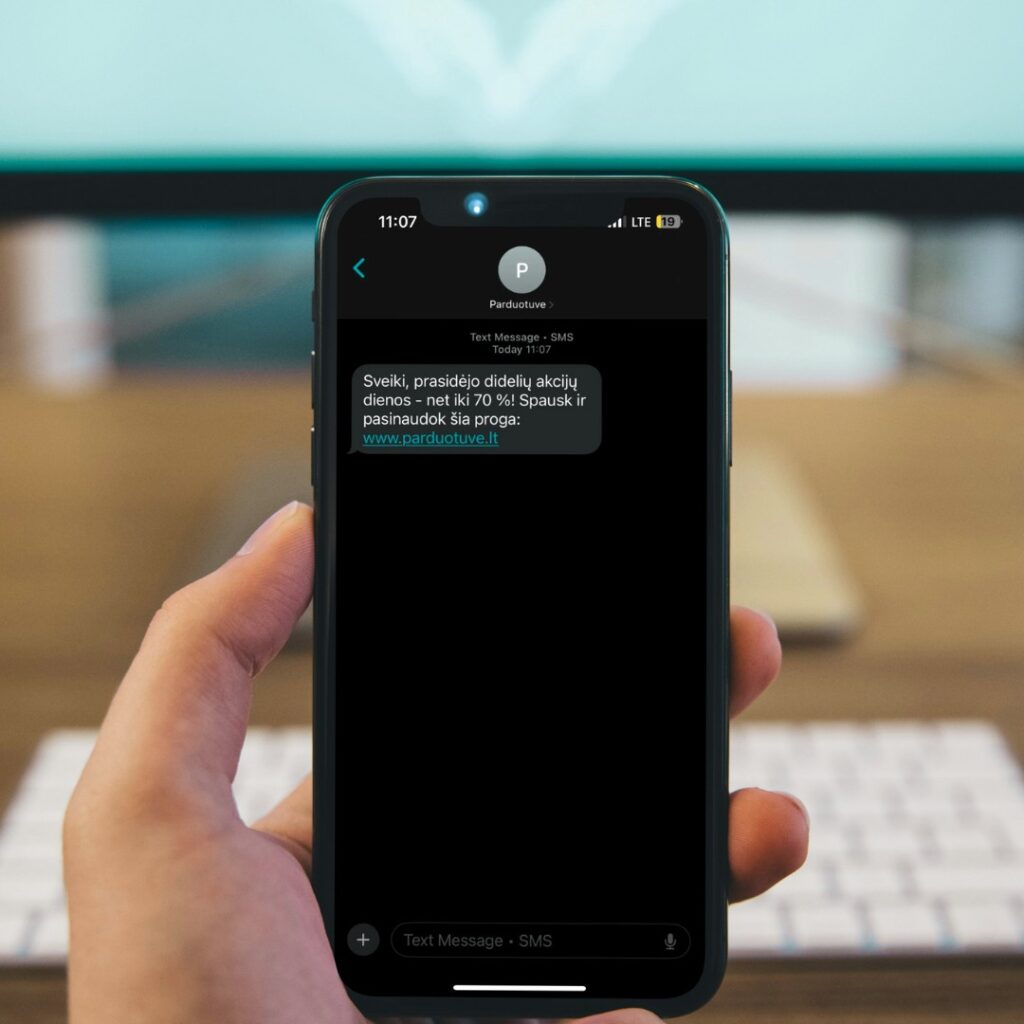
SMS marketing works in a very simple yet effective way. First, a business collects customers’ consent to receive SMS messages: this often happens through online forms, the purchasing process, or loyalty programs. Once the contacts have been collected, targeted messages containing offers, promotions, or reminders are sent out.

Key steps in SMS marketing:

  • Building a contact database – It is important to obtain the user’s explicit consent.
  • Segmentation – Customers are grouped according to their behavior or needs.
  • Creating message content – a short, clear message with a call to action (CTA).
  • Choosing a time – Messages are sent at the right time, such as before a weekend sale.

When implemented properly, SMS marketing helps maintain contact with customers and encourages repeat purchases.

What are the benefits of SMS advertising?

SMS marketing offers unique advantages that set it apart from other forms of digital communication. It is one of the most direct and fastest ways to reach customers, as SMS messages are usually opened within just a few minutes of being received. In addition, this tool allows you to personalize messages and send them to targeted groups of users.

Advantages:

  • An exceptionally high opening rate
    More than 90% of SMS messages are read within the first hour—something you won’t achieve with email or social media.
  • Direct and personal contact
    The message reaches the user directly on their phone—there are no algorithms limiting its visibility.
  • Quick response
    Consumers respond quickly to SMS marketing—which makes it ideal for time-sensitive offers or reminders.
  • Low costs and high returns
    Compared to other advertising channels, SMS campaigns are extremely cost-effective and often yield a high return on investment (ROI).
  • Easy campaign management
    SMS systems can be quickly installed, launched, and integrated with other platforms—no complex tools are required.
  • Ability to automate
    You can schedule messages based on user actions, dates, or purchase history.
  • Wide range of applications
    Suitable for both small businesses and large enterprises—from beauty salons to e-commerce giants.
  • High level of engagement
    If messages are relevant and delivered at the right time, customers don’t just read them—they take action: they click on links, respond, or make a purchase.

In summary, SMS advertising allows you to establish an effective, fast, and cost-effective connection with customers, driving both short-term sales and long-term loyalty.

When should you use SMS campaigns?

SMS campaigns are particularly useful when you need to quickly reach customers with important information. For example, SMS marketing is ideal for announcing limited-time promotions, last-minute deals, or sales. SMS messages are also effectively used to remind customers about appointments, order status, or the benefits of loyalty programs.

SMS marketing is particularly effective when a business has a reliable contact list and wants a quick response—this applies to both brick-and-mortar stores and e-commerce platforms. This channel is also suitable for seasonal campaigns, holiday greetings, or personalized offers. The most important thing is to use it responsibly and respect the customer’s time.

How does SMS advertising help attract new customers and retain existing ones?

SMS marketing is not only a way to inform, but also a powerful tool for actively influencing consumer behavior. To attract new customers, SMS messages can be used to offer special deals for first-time purchases, discount codes during registration, or reminders about abandoned shopping carts. Such solutions act as an incentive to take action—to sign up, try a product, or use a service.

For existing customers, SMS marketing helps maintain contact and build loyalty:

  • We send personalized offers based on your purchase history
  • Reminders about important events—birthdays, the expiration of loyalty points, and the end of a subscription
  • Sharing early access to news or promotions

Over time, this strategy not only encourages repeat purchases but also strengthens the emotional connection with the brand. SMS advertising allows you to communicate with customers in a format that is convenient for them, which builds trust and long-term value.

How can you tell if SMS advertising is working for your business?

To assess whether SMS marketing is effective, it is important to track several key metrics. This data helps determine whether SMS messages are achieving their goals and whether it is worth continuing to invest in this channel.

Notable figures:

  • Opening indicator – shows how many recipients have read the message.
  • Click-through rate (CTR) – If a message contains a link, you can track how many people clicked on it.
  • Number of conversions – How many customers performed the desired action (e.g., purchased a product).
  • Rejection rate – If many users are opting out of SMS messages, it might be necessary to review the content of the messages or the time they are sent.
  • Feedback – Customer comments or responses help assess the tone and relevance of the campaign.

SMS marketing can be highly profitable if campaigns are monitored and continuously refined based on real-time data.

Why should you choose us for your SMS advertising?

The Increla team specializes in effective SMS marketing, so we can help your business achieve real results without unnecessary trial and error. We don’t just plan campaigns—we also continuously monitor their performance and optimize content and timing to ensure your SMS messages hit the mark.

Why customers choose Increla's services:

  • We have experience in a variety of fields—from retail to the service sector.
  • We use advanced SMS marketing platforms that allow us to segment our audience and automate messaging.
  • We create personalized and high-converting messages.
  • We ensure GDPR compliance and secure data management.

Leave your SMS marketing to us—you’ll get not only a service, but also a partner committed to helping your business grow.